If your disc keeps turning the wrong way or fading left too early, your throwing technique might not be the problem. It could be the disc's stability. In this guide, we'll explain what understable, stable and overstable mean, how to read stability from flight numbers and which discs work best in different situations.
What is disc stability?
Stability describes how a disc moves from side to side during flight. All directions in this guide refer to a right-handed backhand throw. For a left-handed backhand or right-handed forehand, the directions are reversed.
- An understable disc turns right during the high-speed part of its flight and finishes relatively straight.
- A stable disc flies straight for most of its flight and fades slightly left at the end.
- An overstable disc barely turns right and finishes with a strong fade to the left.
The same disc can fly very differently depending on who throws it. Flight numbers and manufacturers' flight charts are generally based on an intermediate player's throw. For a beginner, an understable disc may behave more like a stable disc because there isn't enough arm speed to make it turn right. That's why understable discs are often a good choice for beginners: at lower arm speeds, they tend to fly fairly straight. An advanced player, however, can make that same disc turn so far right that it never comes back. At higher arm speeds, even a stable disc may turn right during the early part of its flight.
How to read stability from flight numbers
Most discs have four flight numbers, such as 8 / 6 / -4 / 1. The last two tell you the most about stability.
GRAM discs also have a Power scale that shows how much arm speed a disc needs. For example, Vilnius has a Power rating of 1, while Reykjavik has a rating of 4. The lower the number, the easier it is to keep the disc on your intended flight path.

Three types of stability and when to use them
Understable
turn -2 or lower · fade 0–1Who it's for: Beginners and players with lower arm speed.
When to use it: On holes that turn right, when you want straight distance with less effort, or when throwing a hyzer flip or roller.
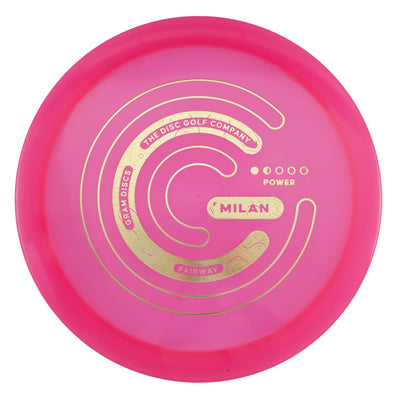
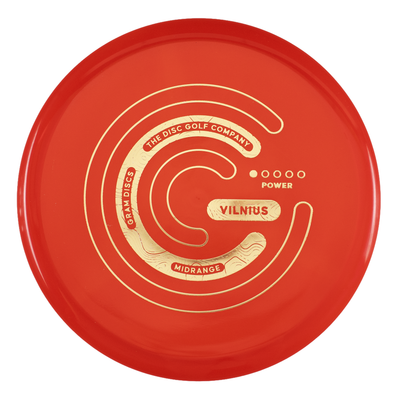
Examples: GRAM Milan (fairway driver), GRAM Vilnius (midrange).
Stable
turn 0 to -1 · fade 0–2Who it's for: Every player. A stable disc is often one of the most-used discs in the bag.
When to use it: In straight wooded fairways, for controlled midrange shots and whenever you need a reliable, predictable flight path.
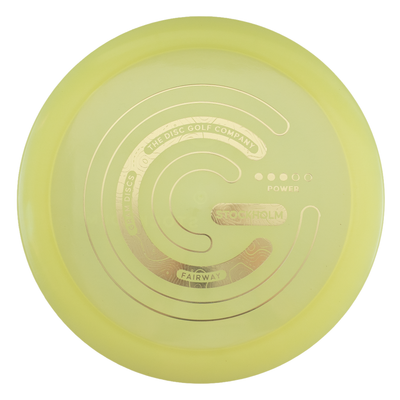
Examples: GRAM Helsinki (midrange), GRAM Stockholm (fairway driver).
Overstable
turn 0 or higher · fade 3+Who it's for: More experienced players and those who often play in windy conditions.
When to use it: Into a headwind, for forehand throws, on holes that turn left, when you need a reliable left finish near the basket, or when throwing a high spike hyzer over an obstacle.
Examples: GRAM Warsaw (midrange), GRAM Reykjavik (fairway driver).
 Understable · fairway driverGRAM Milan8 / 6 / -4 / 1 · Power 1.5
 Understable · midrangeGRAM Vilnius5 / 6 / -1 / 0 · Power 1
 Stable · midrangeGRAM Helsinki5 / 6 / 0 / 0 · Power 1.5
 Stable · fairway driverGRAM Stockholm7 / 5 / -1 / 2 · Power 3
 Overstable · midrangeGRAM Warsaw5 / 2 / 0.5 / 4
 Overstable · fairway driverGRAM Reykjavik9 / 4 / 0 / 4 · Power 4
Why the same disc flies differently for you
Flight numbers give you a general idea of how a disc should fly. Its actual flight depends on the player and the conditions.
- Arm speed. If you throw slower than a disc's speed rating requires, it will behave more overstable and fade left earlier. In a beginner's hands, a driver will often fly a shorter distance than a midrange.
- Wind. A disc behaves more understable in a headwind and more overstable in a tailwind. Choose a more reliable, stable disc for headwinds and consider a more understable disc for tailwinds.
- Wear. As a disc hits trees and rocks, it gradually becomes more understable. That's why many players carry both a newer and a more worn version of the same model.
- Plastic and weight. Harder, denser plastics tend to last longer. A lighter disc is easier for a beginner to throw, but it's less reliable in the wind.
- Release angle. A hyzer angle (outside edge of the disc tilted down) encourages the disc to fade left, while an anhyzer angle (outside edge tilted up) encourages it to turn right.
Three situations on the course
1Narrow wooded fairway
Wooded courses often have 15–20 metre wide corridors with the basket straight ahead. Choose a stable or slightly understable midrange (such as GRAM Helsinki or Stockholm) and release it flat. This helps the disc hold a straight line without fading too far left at the end.
2Open fairway, headwind
Coastal and open courses often have strong headwinds. An understable disc can turn right and land well off the fairway. Choose an overstable disc (such as GRAM Reykjavik or Warsaw) and keep the throw lower.
3Hole that turns right
If the basket is to the right with trees in the way, an understable disc (such as GRAM Milan or Riga) is a good choice. Release it with a slight anhyzer angle or flat, and let the disc's turn do the work. Another option is a forehand throw with an overstable disc.
How to build your bag around disc stability
A good disc golf bag doesn't have to be big. Ideally, each disc category should include one understable, one stable and one overstable disc. For beginners, an understable or stable midrange and a fairway driver are enough to get started. You can add an overstable disc when you start playing more in the wind or throwing more forehands.
| GRAM lineup | Understable | Stable | Overstable |
|---|---|---|---|
| Midrange | Vilnius 5/6/-1/0 | Helsinki 5/6/0/0 | Warsaw 5/2/0.5/4 |
| Fairway | Milan 8/6/-4/1, Riga 8/6/-2/1 | Stockholm 7/5/-1/2 | Reykjavik 9/4/0/4 |
| Driver | Berlin 11/6/-3/2 | Paris 11/6/-1/2 | Oslo 12/5/0/3 |

Frequently asked questions
Should a beginner buy an overstable disc?
Probably not as a first disc. An overstable disc needs enough arm speed and will often fade sharply left when thrown by a beginner. Start with an understable or stable disc. You can add an overstable disc later for windy conditions and forehand throws.
Why doesn't my understable disc turn right?
You might be releasing it with too much hyzer or not throwing it fast enough. Try a flatter release. If the disc still doesn't turn right, it behaves more like a stable disc at your arm speed.
Do I need a different disc for forehand throws?
With a forehand throw, the flight directions are reversed, and an understable disc can easily turn over. That's why stable or overstable discs often work better for forehands.
Is the same disc model equally stable in different plastics?
Not always. The same model can fly slightly differently depending on the plastic and production run. That's why flight numbers are best treated as a general guide.
Explore the full GRAM lineup, plus our selection of midranges and fairway drivers.
GRAM discsMidrangesFairway driversFree DPD parcel locker delivery in Latvia and Lithuania. Delivery to other EU countries costs €5. Visit our showroom at Kassi 12, Tallinn, Estonia (Mon–Fri 10:00–18:00).